
The Legend of Zelda: A Surprising History of Farts, Flatulence, and Bodily Functions
By Christopher Green
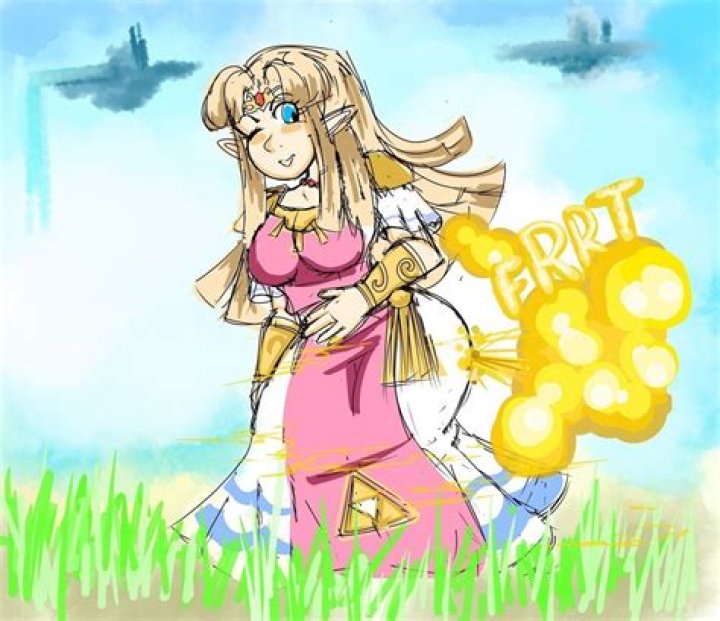
It’s a question that has haunted Hyrule for decades. A query whispered among fans, debated on forums, and immortalized in countless memes. Does Link fart? Does Ganon? What about the King of Hyrule himself? The search for “zelda fart” is not just a silly internet curiosity; it’s a deep dive into the unexpected ways game developers, from Shigeru Miyamoto to the modern teams at Nintendo, have handled—or hilariously failed to handle—the most basic of human (and Hylian) functions.
Let’s be clear from the start. Nintendo is a company known for its family-friendly polish. You won’t find a dedicated “fart button” in any official Zelda title. But that hasn’t stopped the community from finding, creating, and celebrating moments of gaseous glory. The history of flatulence in the Legend of Zelda is a story of glitches, sound design quirks, and the sheer power of player imagination.
The 8-Bit Era: When a Beep Wasn’t Just a Beep
The original 1986 game, The Legend of Zelda, was a masterpiece of minimalism. Sound effects were simple, often just a single beep or a short melody. But players quickly noticed something peculiar. When Link took damage, a specific sound played. When he used an item, another sound played. And when he… well, when he did nothing in particular, the game’s silence was occasionally broken by a random, low-pitched blip.
This is where the legend of the “zelda fart” truly begins. In the original NES title, a specific sound effect, often described as a short, guttural “brrp,” could be heard when Link was hit by an enemy or when a rock was pushed. The sound was so abrupt and so… organic, that generations of players swore it was a programmed fart. Was it intentional? Almost certainly not. The NES sound chip was limited. But the perception was real. For a kid in the 80s, that sound was the funniest thing in the world. It was a glitch in the matrix, a moment of accidental comedy in a serious adventure.
This accidental association was so powerful that it became a foundational meme. Long before the internet, kids were sharing the secret: “If you push the rock in Level 3, it farts.” The sound wasn’t a fart, but it became one in the collective consciousness. This is the core of the “zelda fart” phenomenon: a misinterpretation of audio that became more real than the actual code.
The CD-i Catastrophe: The Fart Heard ‘Round the World
If the NES era gave us an accidental fart, the Philips CD-i era gave us a deliberate, horrifying symphony of them. For those who have blocked it from memory, Nintendo licensed the Zelda franchise to Philips in the early 1990s, resulting in three infamous games: Link: The Faces of Evil, Zelda: The Wand of Gamelon, and Zelda’s Adventure.
These games are legendary for their terrible animation, awful voice acting, and bizarre design. And yes, they are a goldmine for “zelda fart” content. The characters, rendered in stiff, early-CGI style, move with a jerky, unnatural gait. Their idle animations often involve a strange, bouncing motion. Combined with the low-quality sound effects, every jump, every landing, and every enemy death sounds like a wet, squelching release.
One particular scene from The Wand of Gamelon has become an internet classic. Link, voiced with a bizarre, monotone delivery, says a line of dialogue. Then, he makes a sound. It’s not a word. It’s a grunt. A groan. A sound that, to modern ears, is unmistakably a fart. The clip has been remixed, slowed down, and analyzed to death. It is the single most famous “zelda fart” moment in history. It’s not a glitch. It’s a feature of a game that was fundamentally broken. The CD-i titles are a cautionary tale, but they are also a gift to the meme economy.
The 3D Era: Silence and the Physics of Flatulence
When Nintendo moved to 3D with Ocarina of Time, the company’s attention to detail became legendary. Link could climb, swim, roll, and play the ocarina. But he could not, officially, fart. The developers at Nintendo EAD were meticulous. They created a world where every sound had a purpose. The clink of a rupee, the roar of a Dodongo, the gentle rustle of grass. There was no room for bathroom humor.
However, the physics engine of Ocarina of Time and its successors created new opportunities. Players discovered that if you used the “Hover Boots” in a specific way, or if you pushed an enemy into a corner, the collision detection would sometimes produce a strange, percussive sound. It wasn’t a programmed fart, but it sounded like one. The community, ever vigilant, documented these “physics farts” on early forums like GameFAQs and Zelda Universe.
Then came The Wind Waker. The cel-shaded art style was controversial at launch, but it allowed for more expressive character animation. Link’s face could show surprise, fear, and determination. But his body? Still silent. The game’s vibrant, cartoonish world seemed like the perfect place for a little slapstick flatulence, but Nintendo held the line. The closest we got was the sound of a Bokoblin being launched from a cannon, which some fans jokingly called a “cannon fart.”
Breath of the Wild and Tears of the Kingdom: The Age of Player-Created Farts
The modern era of Zelda, defined by Breath of the Wild and Tears of the Kingdom, has completely changed the game. These are physics sandboxes. You can build a flying machine, cook a dubious meal, and ride a bear. The potential for accidental (and intentional) flatulence is higher than ever.
In Breath of the Wild, the sound design is incredibly rich. The crunch of snow, the crackle of a campfire, the hiss of a Korok seed puzzle. But players quickly found that certain enemy death sounds, particularly those of the smaller Chuchu jelly monsters, had a distinct “pop” that sounded suspiciously like a fart. The sound of a Octorok sucking in air and then spitting a rock? That’s a wet fart if I’ve ever heard one.
Tears of the Kingdom took this to the next level with the Ultrahand ability. Players can now attach almost any object to any other object. This has led to the creation of “fart machines.” Using a combination of Zonai devices—fans, wheels, and springs—players have built contraptions that produce a rhythmic, percussive sound that is unmistakably flatulent. One popular build involves attaching a series of wooden boards to a spinning wheel, creating a “farting flail” that makes a sound with every rotation. These creations are shared on YouTube and TikTok, often with the hashtag #zelda fart.
The physics engine itself is a source of humor. If you drop a heavy metal box on a Bokoblin, the resulting squish sound is often described as a “death fart.” The game’s ragdoll physics, when an enemy is launched by a bomb, can produce a series of sounds that mimic a long, drawn-out flatulence. The community has embraced this. It’s not a bug; it’s a feature of emergent gameplay.
The Lore of Farts: A Serious Analysis
Is there any canonical flatulence in the Zelda universe? The answer is a firm, resounding “no.” Nintendo has never officially acknowledged the phenomenon. But that hasn’t stopped fans from building elaborate theories. Some argue that the Great Deku Tree, being a living organism, must produce some form of gas. Others point to the Gorons, who eat rocks and produce heat. Surely, they must have some digestive byproduct.
The most popular fan theory involves the Poe Collector from Ocarina of Time. This ghostly figure floats around the Hyrule Field at night, collecting souls. His idle animation involves a strange, bobbing motion. Some fans have theorized that the sound he makes when he appears is actually a ghostly fart. This is, of course, pure speculation, but it shows the depth of the community’s engagement with the topic.
There is also the matter of the “fart flower” in The Minish Cap. This plant, when activated, releases a cloud of purple gas that stuns enemies. The game’s text describes it as a “stinky spore.” Is it a fart? The game never says so, but the implication is clear. It’s a weaponized bodily function, and it’s the closest the mainline series has ever come to acknowledging the concept.
The Psychology of the Zelda Fart
Why does this topic persist? Why do millions of people search for “zelda fart” every year? The answer lies in the contrast between the high fantasy of the series and the low humor of flatulence. Zelda is a world of epic quests, ancient prophecies, and beautiful music. It is serious. A fart is the ultimate deflator of seriousness. It’s a reminder that even heroes are human (or Hylian).
This is a form of play. It’s a way for the community to take ownership of the franchise. Nintendo creates a polished, controlled experience. The fans, by finding and celebrating farts, are injecting their own chaos into the system. It’s a form of rebellion, a way of saying, “We see your perfect world, and we’re going to make it a little bit sillier.”
The search for “zelda fart” is also a search for connection. It’s a shared joke. When you find a new fart sound in Tears of the Kingdom, you don’t keep it to yourself. You record it, you post it, and you laugh with thousands of other people. It’s a low-stakes, high-reward form of community bonding. It’s the digital equivalent of a group of kids giggling in the back of a classroom.
The Future of Flatulence in Hyrule
What does the future hold for the “zelda fart”? As Nintendo continues to develop the series, the physics engines will only become more complex. The potential for accidental comedy will grow. The next Zelda game, rumored to be a new 2D title or a direct sequel to Tears of the Kingdom, will undoubtedly provide new opportunities.
Will Nintendo ever officially add a fart? It seems unlikely. The company’s brand is built on a certain level of dignity. But they don’t have to. The community will do it for them. The “zelda fart” is not a bug. It’s not a feature. It’s a folk tradition. It’s a piece of internet folklore that has been passed down from the NES to the Switch. It’s a testament to the power of player imagination, the joy of shared humor, and the simple, undeniable truth that even the greatest heroes have to let one go sometimes.
So the next time you’re exploring Hyrule, listen closely. Listen to the wind. Listen to the monsters. Listen to the sound of a rock being pushed. You might just hear a little piece of history. You might just hear the legend of the Zelda fart.
Related Archive
More in gaming
