Anime Fanservice Compilation: A Deep Dive into the Genre’s Most Controversial Trope
By Lily Fisher
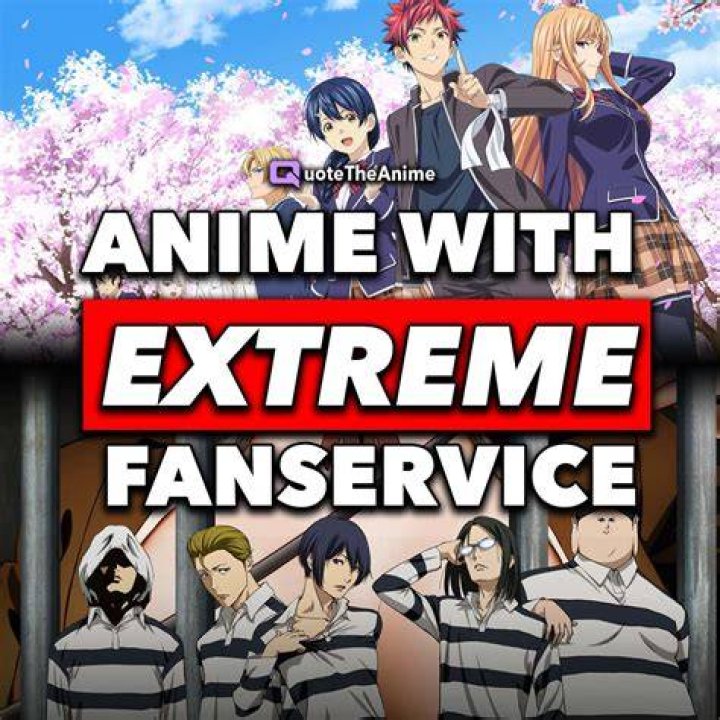
The term "anime fanservice compilation" might conjure up a specific image for seasoned viewers. For the uninitiated, it sounds like a niche corner of the internet. But the reality is far more complex. Fanservice, in its many forms, has been a staple of Japanese animation for decades. It’s a tool, a crutch, and sometimes, a genuine artistic choice. This article isn’t just a list. It’s an exploration. We’ll look at why these compilations exist, what they say about the industry, and how they’ve evolved.
Let’s start with a simple truth. The anime fanservice compilation is a phenomenon born from the internet. Before streaming, before YouTube, fans would trade VHS tapes. They’d fast-forward to specific scenes. The compilation was a labor of love, a curated highlight reel. Today, it’s a search term that drives millions of views. But what exactly are we talking about? It’s not just about revealing outfits or accidental falls. It’s about a specific kind of visual language. A language that speaks directly to a core audience.
Think of it as a shorthand. A wink from the creator to the viewer. It says, “I know why you’re here.” And for many, that’s part of the appeal. The best anime fanservice compilation doesn’t just show skin. It shows character. It shows humor. It shows a deliberate, often playful, subversion of expectations. But it’s also a minefield. Critics argue it undermines storytelling. They say it reduces complex characters to objects. And they’re not entirely wrong.
So, how do we navigate this? We look at the history. We look at the context. We look at the creators who do it well, and those who don’t. This is a journey through the lens of a camera, the stroke of a pen, and the click of a mouse. It’s about understanding why a scene of a character tripping and landing in an awkward position can be more memorable than an entire season of plot. It’s about the economics of attention. And it’s about the strange, enduring power of the anime fanservice compilation.
The Origins: From Tezuka to the Modern Era
Fanservice didn’t start with the internet. It started with Osamu Tezuka. The “God of Manga” understood the power of a well-placed visual gag. His characters, like the iconic Astro Boy, were often drawn with exaggerated features. But the modern concept of fanservice—the deliberate inclusion of sexually suggestive or titillating material—really took off in the 1980s and 1990s. Shows like “Urusei Yatsura” and “Ranma ½” pioneered the “accidental pervert” trope. A male protagonist would stumble into a female character’s private moment. Cue the slapstick. Cue the blush. Cue the compilation.
These early examples were often framed as comedy. They were part of a larger, chaotic narrative. The anime fanservice compilation of this era was less about pure titillation and more about character dynamics. It was a way to break tension. It was a way to show vulnerability. But as the industry grew, so did the demand. By the late 1990s and early 2000s, shows like “Love Hina” and “To Love-Ru” had turned fanservice into a primary selling point. The compilations became longer. The scenes became more explicit. The line between playful and problematic began to blur.
It’s important to note that this wasn’t just a Japanese phenomenon. Western audiences, hungry for anything different, embraced these shows. The anime fanservice compilation became a gateway. It was a way to share the “best parts” of a series without committing to the full episode. It was a social currency. “Have you seen the hot springs episode?” became a common question among fans. And the answer was often a link to a compilation.
The Anatomy of a Compilation: What Makes It Work?
Not all fanservice is created equal. A good anime fanservice compilation has a rhythm. It has a structure. It’s not just a random collection of scenes. It’s a narrative in itself. Think of it as a highlight reel of a sports game. You don’t show every play. You show the touchdowns. You show the big hits. You show the moments that make the crowd roar.
In the context of anime, those moments are often built on a few key pillars. First, there’s the “accidental” scenario. A character falls, a door opens at the wrong time, a gust of wind blows at the perfect moment. It’s a setup that feels almost ritualistic. Second, there’s the reaction. The character’s embarrassment, anger, or playful teasing is just as important as the visual itself. Third, there’s the payoff. The scene must deliver on the promise of the setup. A poorly executed fanservice scene feels cheap. A well-executed one feels like a reward.
Then there’s the editing. The best compilations are curated by fans who understand pacing. They know when to cut. They know when to linger. They add music, often from the show itself, to heighten the emotional impact. They might add text overlays or sound effects. It’s a form of fan art. It’s a way of saying, “This is what I love about this show.” And that passion is infectious. It’s why a simple search for “anime fanservice compilation” can yield thousands of results, each one a unique take on the same source material.
The Cultural Divide: Why It’s So Controversial
Let’s address the elephant in the room. The anime fanservice compilation is deeply controversial. Critics argue that it perpetuates harmful stereotypes. They say it objectifies women, and sometimes men, in ways that are damaging to real-world perceptions. They point to the sheer volume of content. They argue that it normalizes a gaze that is inherently predatory. And there’s data to back this up. Studies have shown that repeated exposure to sexualized media can influence attitudes and behaviors.
But the defenders have their own arguments. They say it’s fantasy. They say it’s a cultural difference. They point to the fact that many fanservice-heavy shows are comedies, not dramas. They argue that the characters are often in on the joke. They say that the anime fanservice compilation is a celebration of animation itself. It’s a showcase of the medium’s ability to depict things that live-action cannot. The exaggerated physics, the impossible poses, the vibrant colors—it’s all part of the art form.
The truth is somewhere in the middle. The industry is not a monolith. Some creators use fanservice thoughtfully. They integrate it into the story. They use it to explore themes of sexuality, identity, and power. Others use it as a crutch. They rely on it to prop up weak writing. The anime fanservice compilation, in its raw form, doesn’t discriminate. It collects the good, the bad, and the ugly. It’s a mirror held up to the industry. And what it reflects is often uncomfortable.
The Economics of Attention: Why Studios Keep Making It
Money talks. And in the anime industry, fanservice sells. It’s a simple equation. A show with a strong fanservice element is more likely to generate buzz. It’s more likely to be shared on social media. It’s more likely to spawn an anime fanservice compilation that goes viral. That attention translates into merchandise sales, Blu-ray purchases, and streaming numbers. For a studio, it’s a low-risk, high-reward strategy.
Consider the business model. Many anime series are produced as advertisements for the source material—manga, light novels, or games. The goal is not necessarily to make a profit on the anime itself. The goal is to drive sales of the original product. A well-placed fanservice scene can be the hook that brings in new readers. It’s a marketing tool. And the anime fanservice compilation is the ultimate form of word-of-mouth advertising. It’s a free preview. It’s a taste of what the show has to offer.
This creates a feedback loop. Studios see that compilations are popular. They double down on the elements that generate those compilations. The writing becomes secondary. The plot becomes a vehicle for the next “big” scene. Critics call this a race to the bottom. Supporters call it giving the audience what they want. The truth is, it’s a business. And like any business, it responds to demand. The anime fanservice compilation is not just a fan creation. It’s a market signal.
The Best and Worst: A Critical Look at Examples
Let’s get specific. Not all compilations are created equal. Some are masterpieces of editing. Others are lazy cash grabs. A great example of the former is the work done on “Kill la Kill.” The show is a satire of fanservice itself. It’s over-the-top. It’s self-aware. The compilations of this show often highlight the absurdity. They show the transformation sequences, the ridiculous poses, the sheer energy of the animation. It’s fanservice as art. It’s a commentary on the genre.
On the other end of the spectrum, you have shows like “High School DxD.” This is a series that wears its intentions on its sleeve. The plot is secondary to the ecchi content. The compilations are straightforward. They are collections of the most explicit scenes. There’s no irony. There’s no subtext. It’s pure, unadulterated fanservice. For some, this is the pinnacle. For others, it’s the problem. The anime fanservice compilation for this show is a litmus test. It tells you exactly what you’re getting into.
Then there are the outliers. Shows like “Food Wars!” use fanservice in a unique way. The “foodgasms” are exaggerated reactions to eating. They are sexualized, but they are also comedic. The compilations of these scenes are often hilarious. They are a testament to the creativity of the animators. They show that fanservice doesn’t have to be limited to traditional tropes. It can be about passion, about sensation, about the joy of the experience. It’s a reminder that the anime fanservice compilation can be more than just a collection of skin.
The Future: Where Does the Genre Go From Here?
The landscape is changing. Streaming services are becoming more global. Censorship laws vary by country. Platforms like Crunchyroll and Netflix are increasingly sensitive to content that might be considered problematic. Some shows are being edited for international release. Others are being skipped entirely. The anime fanservice compilation, once a niche hobby, is now a battleground for cultural values.
But there’s also a counter-movement. Independent creators are using platforms like Patreon and Ko-fi to produce content that is explicitly for adults. They are bypassing traditional gatekeepers. They are creating compilations that are more explicit, more niche, and more personal. The future of the anime fanservice compilation might be decentralized. It might be less about mainstream shows and more about specific fetishes, specific art styles, and specific communities.
Technology is also playing a role. AI is being used to generate new scenes. Deepfakes are being used to insert characters into existing compilations. The line between fan creation and official content is blurring. This raises ethical questions. Who owns the image of a character? What happens when a compilation is used to harass or demean? These are questions that the industry is only beginning to grapple with. The anime fanservice compilation is not going away. But it is evolving. And how we choose to engage with it will shape the future of the medium.
Conclusion: More Than Meets the Eye
The anime fanservice compilation is a complex artifact. It’s a product of fandom, of commerce, and of artistic expression. It can be shallow. It can be profound. It can be offensive. It can be hilarious. It is, above all, a reflection of the audience that creates it. We are the ones who watch, who share, who curate. We are the ones who decide what is worth remembering. The compilation is a mirror. And what we see in it says as much about us as it does about the anime itself.
Whether you love it or hate it, the phenomenon is undeniable. It has shaped the industry. It has created communities. It has sparked debates. The next time you see a link to an anime fanservice compilation, take a moment to think about what you’re about to watch. Is it art? Is it exploitation? Is it just a bit of fun? The answer, as always, is complicated. And that’s what makes it worth talking about.